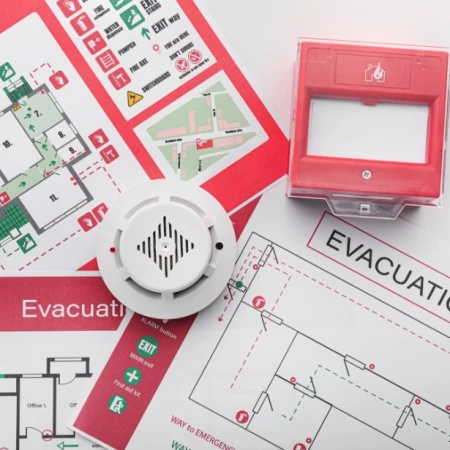
Fire Drill
What a fire drill is, what OSHA expects and how often to run one, with a step-by-step guide and checklist for planning and running a workplace fire drill and accounting for every employee.

Duty of care is a legal obligation to act with reasonable care to avoid causing foreseeable harm to others. If someone owes you a duty of care and fails to meet it, and you are harmed as a result, they may be liable for negligence. Doctors, drivers, property owners, schools and employers all owe duties of care to the people affected by what they do.
For employers, duty of care is more than a legal term. It shapes how you protect employees in the workplace, at home and on the road, and how you respond when something goes wrong. This guide explains the definition, gives everyday examples and sets out what duty of care means for US organizations.
In US law, duty of care is the first element of a negligence claim. To win a negligence case, a person usually has to show four things:
Duty: the defendant owed them a duty of care.
Breach: the defendant failed to meet the standard of care, meaning they did not act as a reasonably careful person or organization would in the same situation.
Causation: the breach caused the harm.
Damages: the person suffered real harm, such as injury, financial loss or property damage.
The standard of care is usually that of a "reasonable person." Professionals, such as doctors and engineers, are held to the standard of a reasonable professional in their field. Exact rules vary from state to state.
There is no single checklist, but US courts usually weigh the same factors:
Foreseeability: could a reasonable person have foreseen that their actions, or failure to act, might harm someone like the plaintiff? This idea goes back to the well-known New York case Palsgraf v. Long Island Railroad (1928), which tied the duty to the risks that can reasonably be foreseen.
The relationship between the parties: some relationships create a duty by their nature, such as employer and employee, business and customer, doctor and patient, or school and student.
Public policy: courts consider whether recognizing a duty is fair and workable, and whether it would create unlimited liability.
General duty to avoid negligence: the everyday duty everyone owes to people who could foreseeably be harmed, such as other road users.
Premises duty: property owners and occupiers must keep premises reasonably safe for visitors and warn of known hazards.
Professional duty: doctors, lawyers, engineers and other professionals must meet the standard of their profession.
Employer duty: employers must take reasonable steps to protect employees from foreseeable harm at work.
Corporate directors' duty of care: directors and officers must make decisions in good faith, on an informed basis and with the care a prudent person would use. This is a fiduciary duty owed to the company, separate from negligence law.
Duty of care shows up in everyday life:
Motorists must drive carefully enough to avoid hurting pedestrians, cyclists and other drivers.
Stores, restaurants and landlords must keep their premises reasonably safe for customers, guests and tenants.
Healthcare providers must treat patients with the skill a competent professional would use.
Schools and colleges must supervise and protect students in their care.
Companies must protect the people who work for them.
A store that leaves a spill on the floor for hours, a driver who runs a red light and a company that sends an employee into a known danger without a plan are all examples of situations where a breach of duty of care could be claimed.
To show that a duty of care was breached, a claimant usually needs evidence of what a reasonable person or organization would have done, and that the defendant fell short. That evidence can include:
Laws, regulations and codes: such as OSHA standards, building codes or traffic laws.
Industry practice: what similar organizations normally do in the same situation.
The defendant's own policies: a company that ignores its own safety procedures is in a weak position.
Knowledge of the risk: whether the defendant knew, or should have known, about the hazard and had time to deal with it.
For employers, this is why written policies, risk assessments, training records and incident logs matter. They show what you did to meet your duty of care.
An employer's duty of care is the responsibility to take reasonable steps to protect employees from foreseeable harm while they work. In the US, that responsibility comes from several sources.
Section 5(a)(1) of the Occupational Safety and Health Act requires every employer to provide a workplace "free from recognized hazards that are causing or are likely to cause death or serious physical harm." Where no specific OSHA standard applies, OSHA can use the General Duty Clause to cite employers for failing to address a known hazard.
OSHA standards cover hazards such as fire safety, emergency action plans, hazardous chemicals and machinery. Many states run their own OSHA-approved plans with additional rules.
Most employees injured at work are covered by state workers' compensation systems, which generally limit their ability to sue their employer. That does not remove the employer's duty to prevent harm in the first place, and employers can still face OSHA penalties, higher premiums and reputational damage.
Employment contracts, company policies and court decisions can all add to what an employer is expected to do, particularly for employees who travel or work in higher risk environments.
Duty of care does not end when employees leave the office. For people working from home or in the field, employers should consider:
Safe working setups: ergonomic equipment and reasonable expectations about hours.
Lone working risks: how employees who work alone can call for help. See lone worker safety.
Emergency communication: how you will reach remote employees if severe weather, a power outage or a local emergency affects them.
Wellbeing: regular contact, especially for people who rarely see colleagues.
Business travel is where duty of care is often tested. Employees on the road face unfamiliar places, transport risks, crime, health issues, natural disasters and political unrest, often far from help. Courts and regulators increasingly expect employers to plan for these risks.
A practical business travel duty of care program usually includes:
A travel risk policy: who can approve trips, what the rules are for higher risk destinations and what support travelers receive.
Pre-trip risk assessment: checking State Department travel advisories and local conditions before approving travel.
Traveler briefings: practical advice on the destination, local emergency numbers and what to do in an incident.
Knowing where travelers are: so you can find people quickly if something happens near them.
Two-way communication: a way to warn travelers and confirm they are safe.
Emergency support: medical and security assistance, and a plan for evacuation if needed.
Many organizations use ISO 31030 guidance to structure their travel risk program.
Consequences can include OSHA citations and penalties, workers' compensation claims and higher premiums, lawsuits where workers' compensation does not apply, and loss of trust among employees and customers. In the most serious cases, there can be criminal liability for willful safety violations that result in death.
This article is general information, not legal advice. Talk to your legal counsel about your specific obligations.
Vismo gives you a live view of where your people are and a fast way to reach them, wherever they work.
Real-time location: see where traveling and field employees are on a live map, through the Vismo app or dedicated devices.
SOS and timed check-ins: a traveler or lone employee can call for help without drawing attention, and a missed check-in is escalated to your team.
Reach everyone at once: mass notification puts the same urgent message on employees' phones, inboxes and collaboration tools, and tracks who has replied that they are safe.
Risk intelligence: threat intelligence feeds flag events near your people so you can act early.
Coverage off the grid: satellite devices keep remote employees connected where cell service fails.
Answers when it matters: with Vismo AI, your team can ask in plain language which employees are near an incident and get an answer from your own location data, then message those people straight away.
Audit trails: a record of alerts, responses and actions supports your duty of care documentation.
When severe weather threatens your sites, our inclement weather policy guide shows how to plan your response. See how Vismo's travel security solution protects employees on the move.
Duty of care is a legal obligation to act with reasonable care so you do not cause foreseeable harm to others.
Duty, breach, causation and damages. A person bringing a negligence claim usually has to prove all four.
There is no single national test in the US. Courts generally ask whether harm was reasonably foreseeable, whether the relationship between the parties creates a duty, and whether recognizing a duty makes sense as a matter of public policy.
Most states use comparative negligence, which reduces the damages a person can recover by their share of the blame. In some states, a person who is more than half at fault cannot recover at all, and a few states still bar recovery for any contributory fault.
Yes. Employers are expected to take reasonable steps to protect employees throughout business trips, including assessing risks, preparing travelers and being able to support them in an emergency.
Section 5(a)(1) of the Occupational Safety and Health Act. It requires employers to keep their workplace free from recognized hazards likely to cause death or serious physical harm, even where no specific OSHA standard applies.
They are related. Duty of care is the obligation to take care. Standard of care is how much care is required, usually what a reasonable person or professional would do in the same situation.
Meeting your duty of care means planning ahead, not reacting after the fact. With Vismo, you can locate employees in seconds, alert them to danger and coordinate help.